ServicesRoof Replacement
Roof Replacement in Norwalk
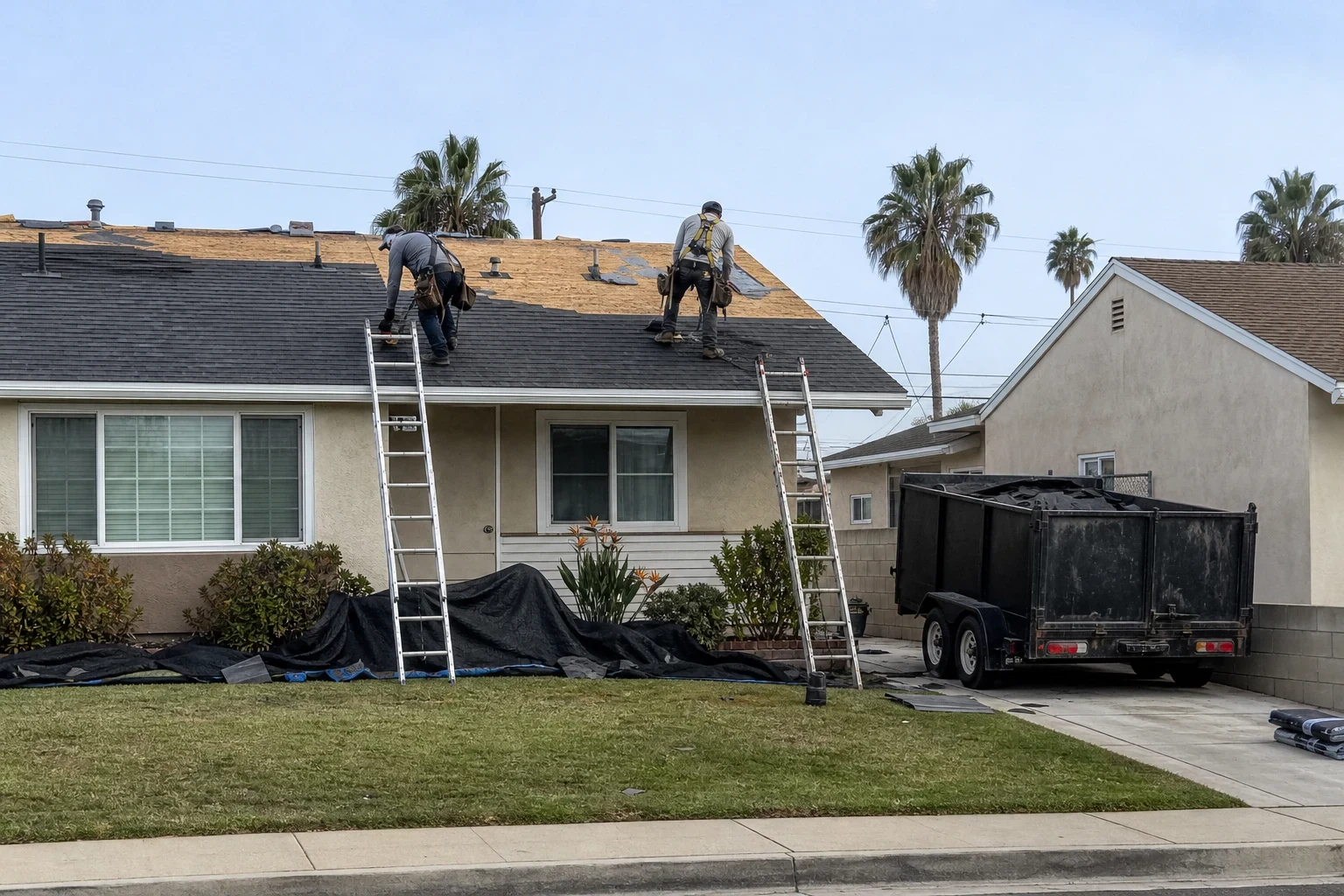
When repairs stop holding, a new roof is the calmer choice. We tear off down to the decking, rebuild what sits underneath and install your new roof with care. Then we come back once the work is done to check it and show you how to care for it.
Repair or Replace: Knowing Which One Your Roof Needs
Most roofs wear out gradually. Shingles shed their granules, underlayment dries and cracks, and the flashing at chimneys and vents works loose. A single leak is a repair. Once the whole surface is tired, each patch buys only a few months, and water simply moves on to the next weak spot.
We start with a free inspection and tell you plainly whether roof repair will still do the job or whether replacement is the better use of your money. If repair is enough, we say so.
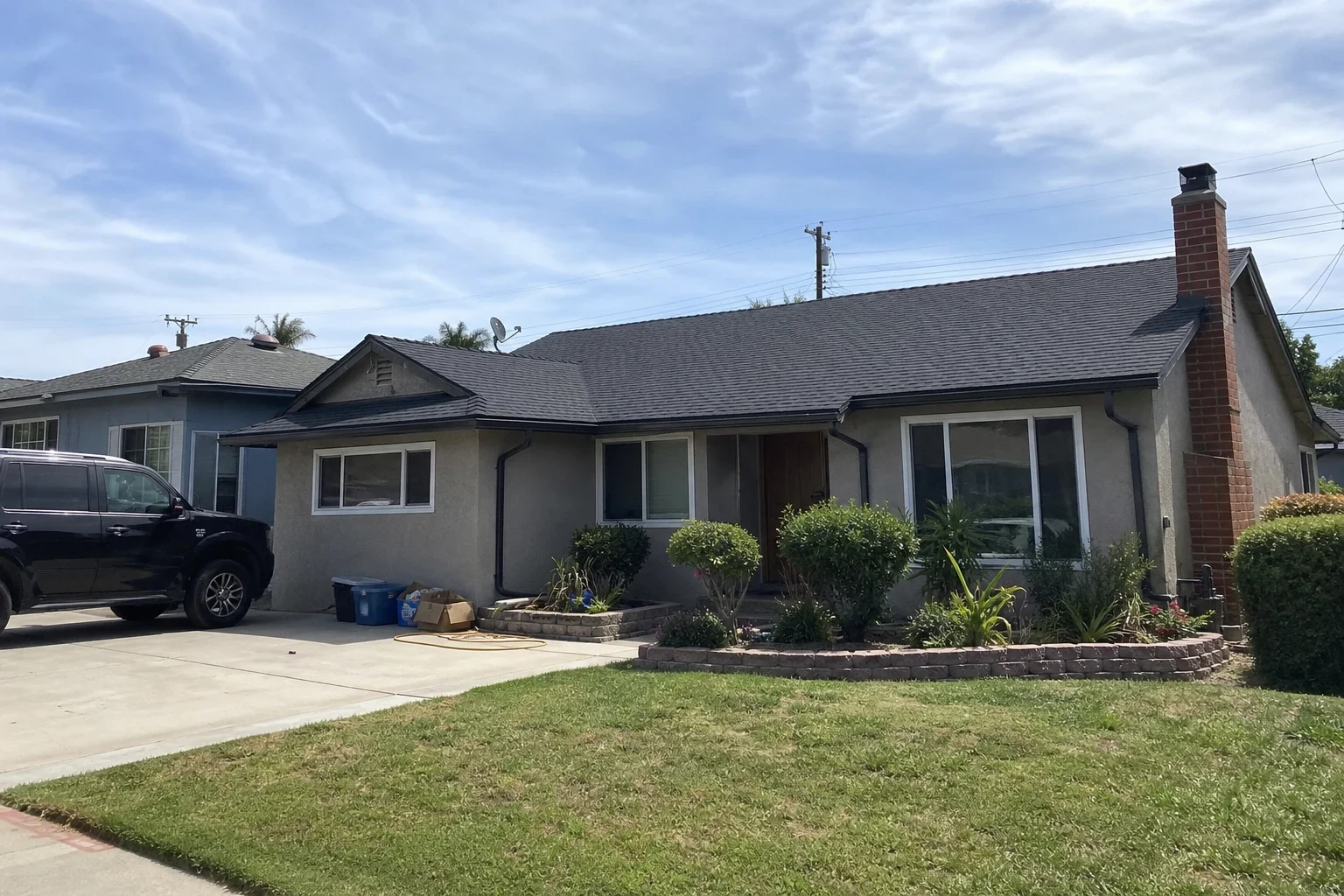
A replacement with us does not end when the dumpster leaves. We return once the job has settled to look over the finished roof, check the flashing and drainage, and walk you through simple care that keeps the new roof in good shape for years.
What Your Roof Replacement Includes
- Full tear-off to the decking
- We remove the old roofing and underlayment completely so we can see the wood underneath. Laying new material over a hidden problem only hides it longer.
- Decking checked and replaced where needed
- Soft, delaminated or water-stained plywood is cut out and replaced. We photograph what we find and talk with you before replacing more than the estimate covered.
- New underlayment, flashing and vents
- Fresh underlayment, new drip edge, new step and valley flashing, and properly sized vents go on before the roofing does. These hidden layers do most of the work of keeping water out.
- Your choice of roofing material
- We install asphalt shingle roofing and tile roofing, and we go over color, weight and how each behaves under long, sunny summers. Where California's energy code calls for cool-rated materials on a reroof, we confirm what applies to your home.
- Permit, city sign-off and daily cleanup
- The permit is ours to pull, and we book the inspector's visit so you are not chasing the city. At the end of every work day the yard gets raked, a magnet sweeps for stray nails and loose debris goes straight into the dumpster.
- A return visit and care notes
- Once the job is complete we come back to recheck the roof and gutters. You get plain notes on what to watch for and when to have it looked at again.
Clues That Your Roof Is Due for Replacement
Grit in gutters and at downspouts
Sandy granules gathering in the gutters or below downspouts show the shingles are losing their protective surface.
Shingles curled, cracked or gone
Years of sun make edges lift and cup, letting wind and water slip beneath. Bald areas on several slopes signal a worn-out surface, not a single problem spot.
Leaks showing up in several rooms
Stains on more than one ceiling, or a leak that comes back after roof leak repair, usually mean the underlayment has given out across the roof.
A roofline that dips
A sag between rafters often means moisture has softened the decking over time. It should be dealt with before the next rainy season.
Patch after patch on an aging roof
Shingles that don't match and tar patches scattered across the roof show that repairs have been chasing problems for some time.
How the Work Goes, From First Visit to Return Visit
- 1
A free look and a line-by-line estimate
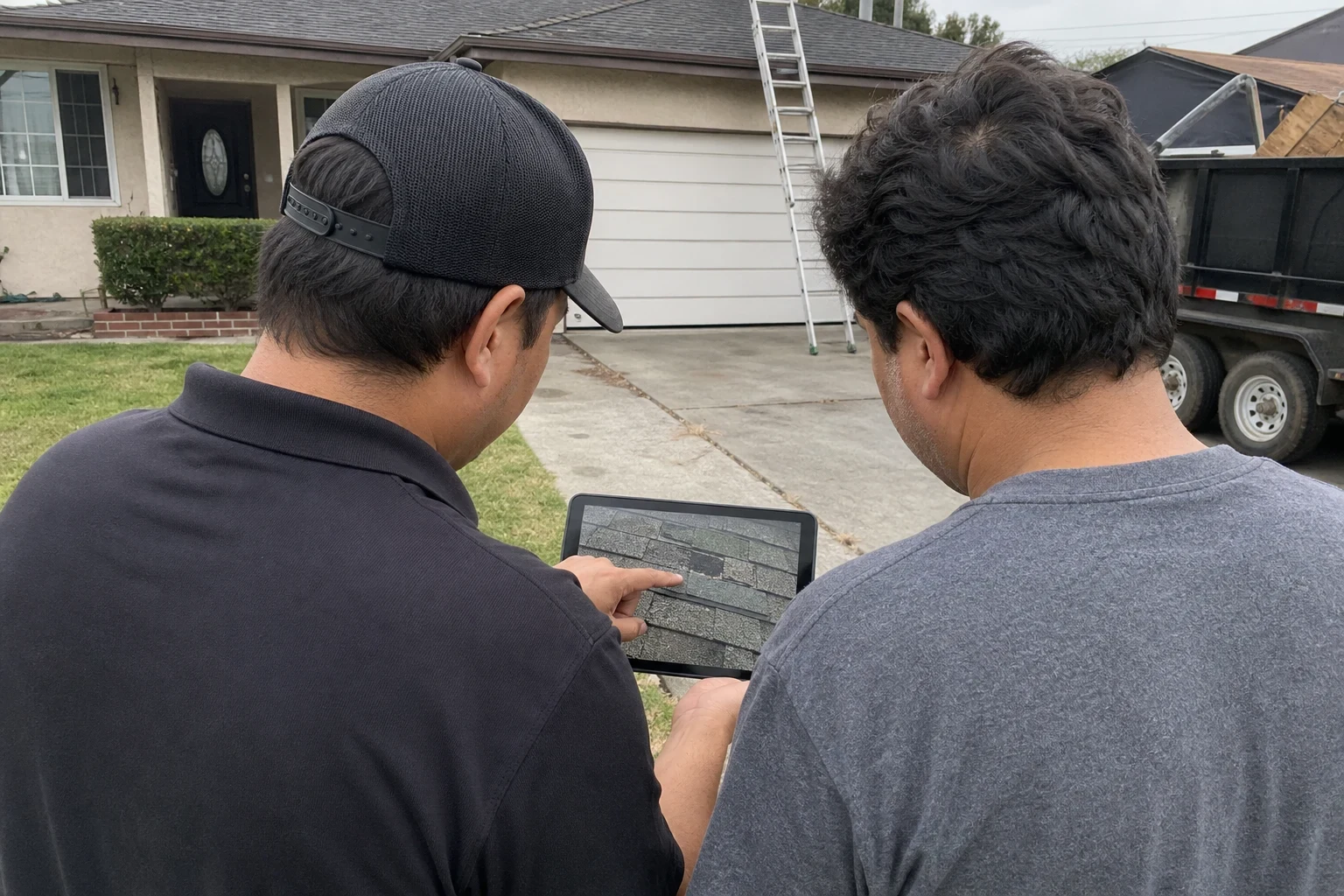
We go up on the roof, check the attic for stains and airflow, and see how water drains off the house. You then get a free written estimate with every part of the job spelled out. Ask your questions in English or Spanish.
- 2
Planning and permit
We settle the material and color with you, pull the permit and set a start date. If you are using financing or an insurance claim, we line that up first.
- 3
Tear-off and installation
Shrubs, windows and the driveway are covered before tear-off. Most homes are roofed in a few days, and we keep the house protected at the end of each day.
- 4
Final inspection and walk-through
The city inspector signs off, and we walk you around the finished roof and point out the flashing, vents and edges we replaced.
- 5
We come back
A few weeks later, ideally once the first good rain has come through, we return to recheck seams, flashing and gutters and answer anything that has come up.
What Goes Into the Price of a New Roof
Your price comes from measurements we take ourselves and what we find on the roof, not from a price chart. Each part of the job is broken out on the written estimate, so you know what everything costs before work begins. Financing through Service Finance Company is available, subject to credit approval, if monthly payments suit you better.
- Roof size and pitch
- A larger roof takes more material and more labor. Steeper slopes call for added safety setup and make every step of the job go slower.
- Tile or shingle
- Tile and asphalt shingles differ in cost, weight and installation time. Switching to tile can also mean confirming the framing will support the extra load.
- Condition of the decking
- Damaged plywood stays hidden until the old roof comes off. Your estimate includes a set price per sheet for any replacement, so there are no surprises.
- Existing layers and roof features
- Removing two old layers takes longer than removing one. Each chimney, skylight, valley and extra vent adds flashing work.
Questions About Replacing Your Roof
Something not covered here? (562) 262-8868
How long does a roof replacement take?
Most single-family homes need a few working days after the materials arrive. Tile, a steep slope or extensive decking repair can add time. We give you an honest schedule up front and tell you if weather pushes it back.
Can you roof over my existing roof?
Code allows it in some cases, but we generally recommend tearing off to the deck. That lets us replace damaged decking, lay new underlayment and flashing, and keep the house from bearing the weight of two roofs.
Will insurance cover a new roof?
It comes down to your policy and whether a covered event, such as a storm, did the damage. We work with your claim directly, taking photos and meeting the adjuster, and the insurer decides on coverage.
Do I have to stay home while you work?
No, go about your day. We like to see you the first morning before tear-off and again for the final walk-through. Expect a day or two of noise while the old roof comes off. An open driveway for the dumpster and framed pictures taken off upstairs walls make the job run smoother.
What happens once the new roof is installed?
We schedule a return visit to look over the roof again, ideally once it has seen some rain. You also get care notes on clearing gutters, trimming branches back and what to look at after strong winds.
See Where Your Roof Stands
We'll climb up, give you a straight repair-or-replace answer and put it in a free written estimate you can keep. Se habla español.