ServicesCommercial Roofing
Commercial Roofing in Norwalk, Kept in Good Order After the Crew Leaves
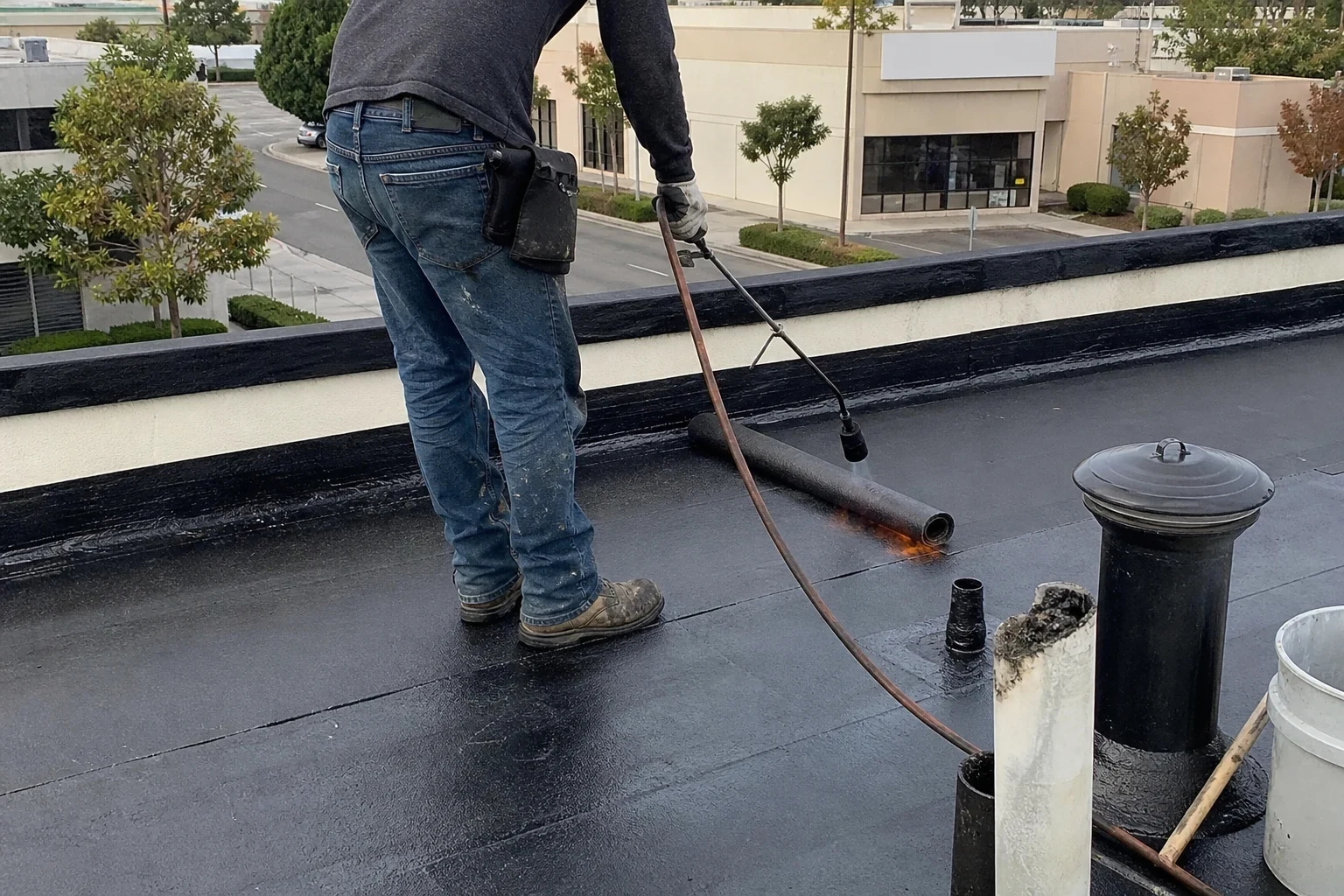
We repair, recover and replace roofs on small commercial buildings, scheduled so your doors can stay open. Every job starts with a roof inspection and ends with a return visit, written care notes and a plain account of what your roof will need next.
Roof work for the buildings your business depends on
Most commercial roofs we see are low-slope: storefronts, small offices, warehouses and mixed-use buildings with a parapet wall and a few rooftop units. They fail differently than a pitched roof. Water sits longer, seams carry more of the load, and every HVAC curb or pipe penetration is a place for a leak to start.
We work on single-ply membranes such as TPO, modified bitumen, older built-up roofs and the pitched shingle or tile sections some buildings carry over an entry. Sometimes the right answer is a targeted repair, sometimes a recover over sound insulation, sometimes a full tear-off. We tell you which, and why, before you spend anything.
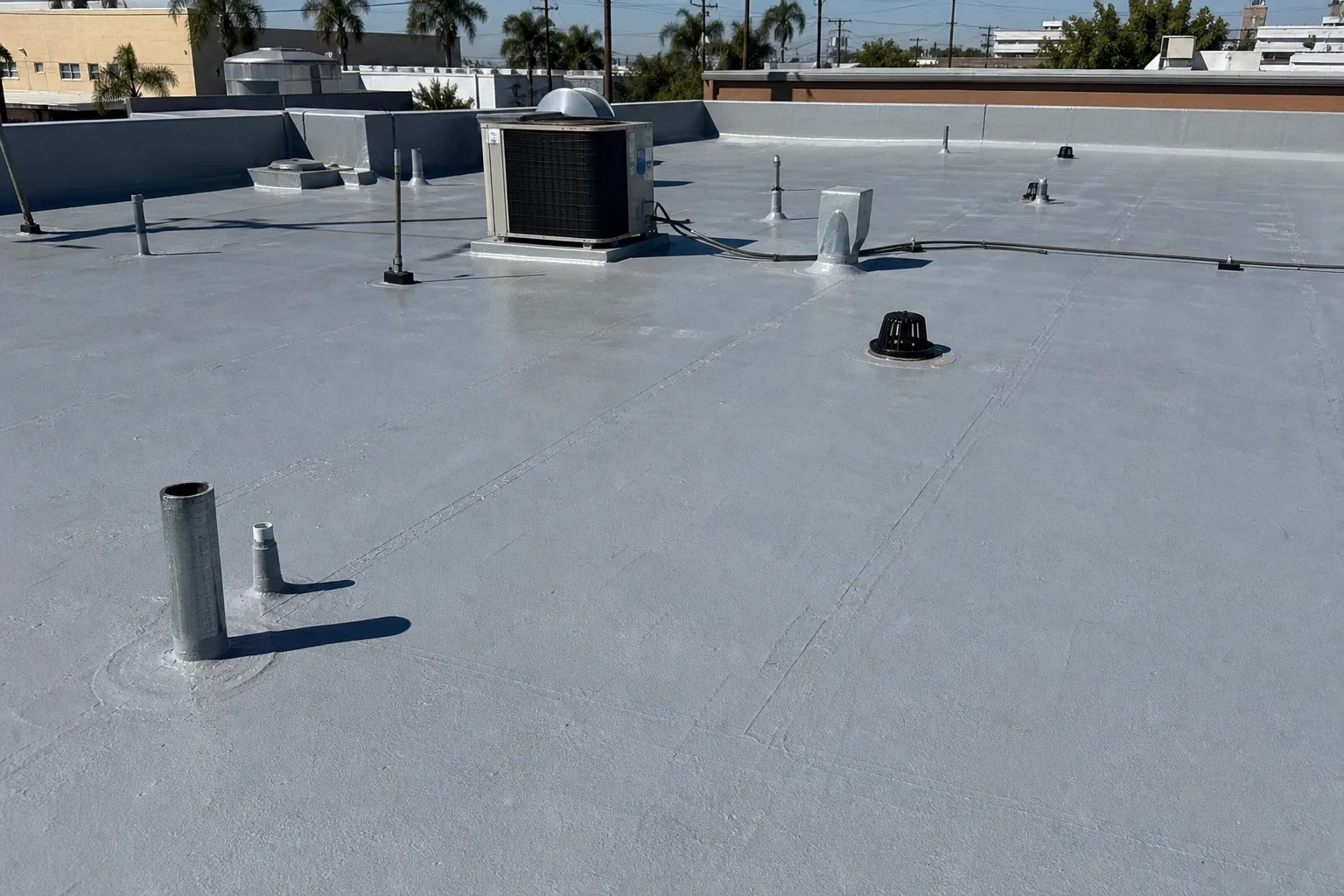
Once the work is done, we come back to check it, walk the roof with you or your property manager, and leave notes on drains, rooftop foot traffic and what to watch for when the winter rains arrive.
What our commercial roof work covers
- Membrane and seam repair
- We clean and reweld or reseal open seams, patch punctures left by foot traffic, and replace sections where the membrane has blistered or shrunk away from the edges.
- Flashing at curbs and parapets
- Most commercial leaks start where the roof meets something else. We rebuild flashing around HVAC curbs, vents, skylights and parapet walls, and reset coping caps that have worked loose.
- Drains, scuppers and gutters
- Ponding water shortens a roof's life. We clear and reset drains and scuppers, correct low spots where the structure allows, and handle gutters and downspouts along the building's edges.
- Recover or full replacement
- When the roof is past repair, we price both a recover over the existing system, where code and the deck allow it, and a full tear-off. You see the trade-offs side by side before deciding.
- Insurance claim support
- When wind or storm damage is involved, we work directly with your insurance claim. We supply photos and a written scope so the adjuster has a clear picture of the roof.
Warning signs on a low-slope roof
Rings on drop-ceiling panels
Tan or brown marks on suspended ceiling panels, most often near exterior walls or below a rooftop unit, tend to trace back to a failed flashing detail or a seam that has opened.
Ponding that lingers
A shallow puddle that dries by the next day is normal. Water still sitting two days past the last rain points to a clogged drain, a sagging deck or crushed insulation.
Blisters or a cracked surface
Raised pockets in the membrane, or a scaly, alligatored surface on an older built-up roof, mean the top layer has stopped protecting what lies underneath.
Loose edges and coping
Membrane pulling back from parapets, or metal edge that lifts in wind, are early warnings. They tend to get worse each time the Santa Ana winds come through.
Climbing cooling bills
A dark, worn surface or wet insulation makes rooftop units work harder all summer. It is worth a look before the next cooling season.
What drives the cost of a commercial roof job
On a commercial roof, what sits below the surface matters more to the price than the square footage. We cut test openings where needed before writing numbers down, so the written estimate matches the roof you actually have. Financing through Service Finance Company is available, subject to credit approval, if spreading out payments would help.
Size and layout
Square footage counts, and so does the layout. A roof with lots of curbs, skylights and parapet corners takes more detail work and more hours.
State of the deck and insulation
Wet insulation has to come out, and rotted or soft decking needs new panels. These findings are often what decides between a recover and a full tear-off.
Type of membrane
TPO, modified bitumen and other systems vary in material price, installation and how much heat they reflect. California energy rules frequently require a reflective cool roof surface on low-slope reroofs, which narrows the choices.
Access and timing
Tight lots, taller buildings, lift equipment and scheduling around your open hours all change the labor and equipment cost.
Permits and city inspections
Bigger jobs need a permit and city inspections. Both are in the estimate from the start, so they do not show up as a surprise.
How a commercial roof job runs
- 1
Free roof inspection
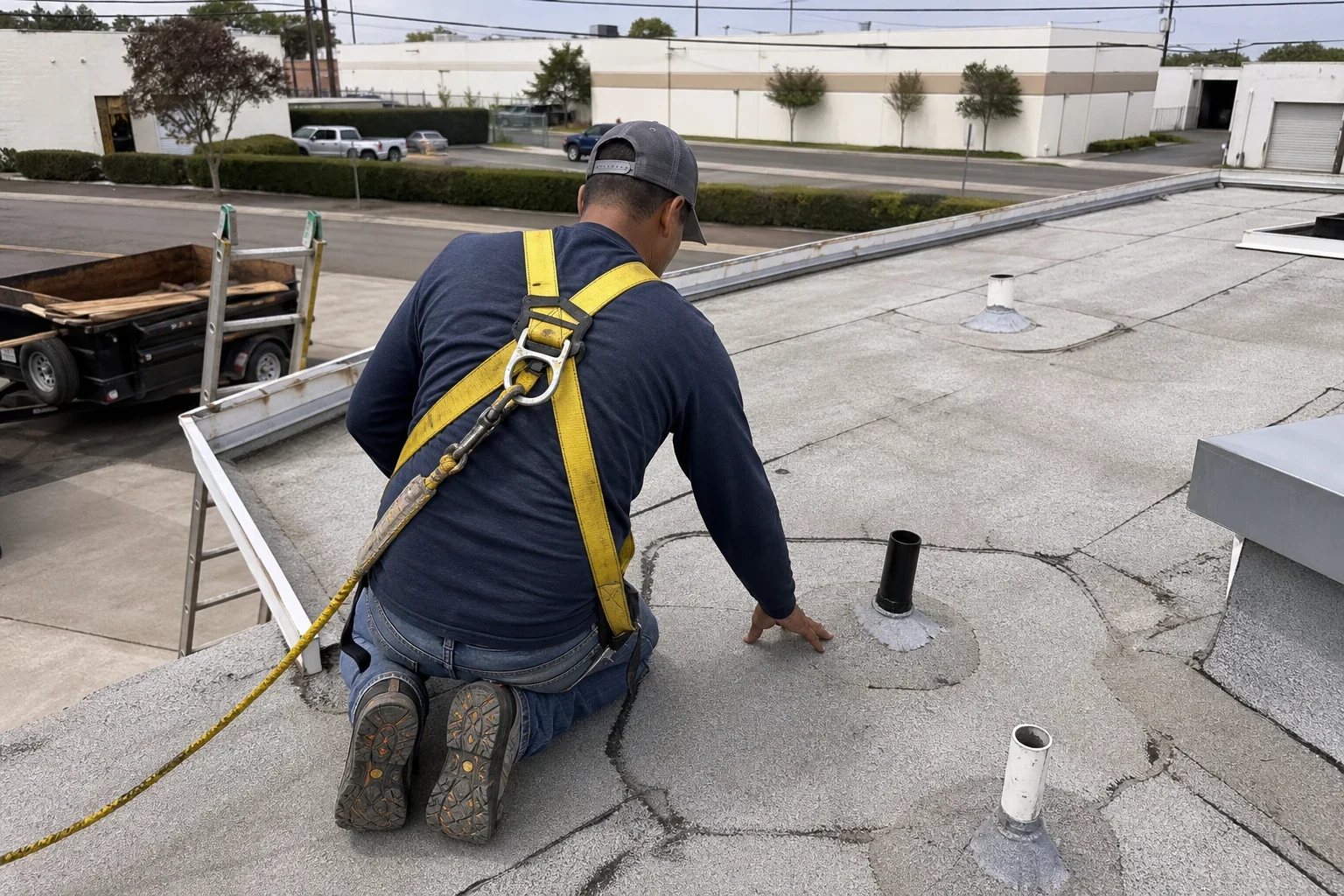
We walk the whole roof, check drains, seams and flashing, and look inside wherever you have seen leaks. You get photos and a free written estimate with each item listed.
- 2
Planning around your business
We agree on work hours, where materials and the dumpster go, and how tenants and customers get in and out. Noisy tear-off can often be scheduled early or on slower days.
- 3
Permit and the work itself
When the scope calls for it, we pull the permit with the city and arrange inspections. Each day ends with the roof watertight and the lot and walkways swept for fasteners.
- 4
Walkthrough and care notes
When the roof is finished, we walk it with you, point out what was done, and leave written care notes covering drain checks, safe paths for HVAC technicians and what to look for during heavy rain.
- 5
Check-back visit
We return once the roof has been through some weather to look at seams, flashing and drains, and we take care of anything that needs a touch.
Questions from building owners
Do we need to close while you work on the roof?
Rarely. Repairs and recovers are quiet, and most customers never know we are up there. For a tear-off, we pick the noisiest days with you, protect the entrances and keep walkways and parking clear of debris.
Does a recover cost less than replacing the roof?
Often it does, since the old roof stays on and there is less to tear off and haul away. It only makes sense if the deck is solid, the insulation is dry and code permits another layer. We check all three first and tell you straight if a recover would just cover up a problem.
Can you also work on the sloped parts of our building?
Yes. Plenty of buildings have a flat main roof plus shingle or tile over the entry or office front. We handle both, and our flat roofing, tile roofing and asphalt shingle roofing pages explain each in more depth.
What happens after the work is done?
We walk the roof with you, leave written care notes and return once the roof has been through some weather to check it. Any seam or flashing that needs work gets fixed then. The notes also help your HVAC service crew keep from damaging the membrane.
Will you work with our insurer on storm damage?
Yes, we deal with your claim directly. We photograph the storm damage, write up the repairs it needs and explain what the adjuster's decision means for the next steps. The adjuster makes the coverage decision.
Have your building's roof looked at
We will walk the roof, show you photos of what we found and give you a free written estimate. We work on commercial buildings in Norwalk and nearby towns like Downey, Cerritos and Bellflower.