ServicesRoof Leak Repair
Roof Leak Repair in Norwalk, Checked Again Once It Rains
The drip in your hallway is seldom right under the opening in the roof. We follow the water back across decking and flashing to where it gets in, fix that spot with matching materials, and return when a real rain has passed to confirm your home stayed dry.
Finding the Entry Point Before Anything Gets Sealed
Water travels. It slips under a shingle, runs along the underlayment or a rafter, and drips wherever gravity lets it go, sometimes several feet from where it got in. Smearing roof cement over the spot above the stain might hide the symptom for a season. It rarely fixes the leak.
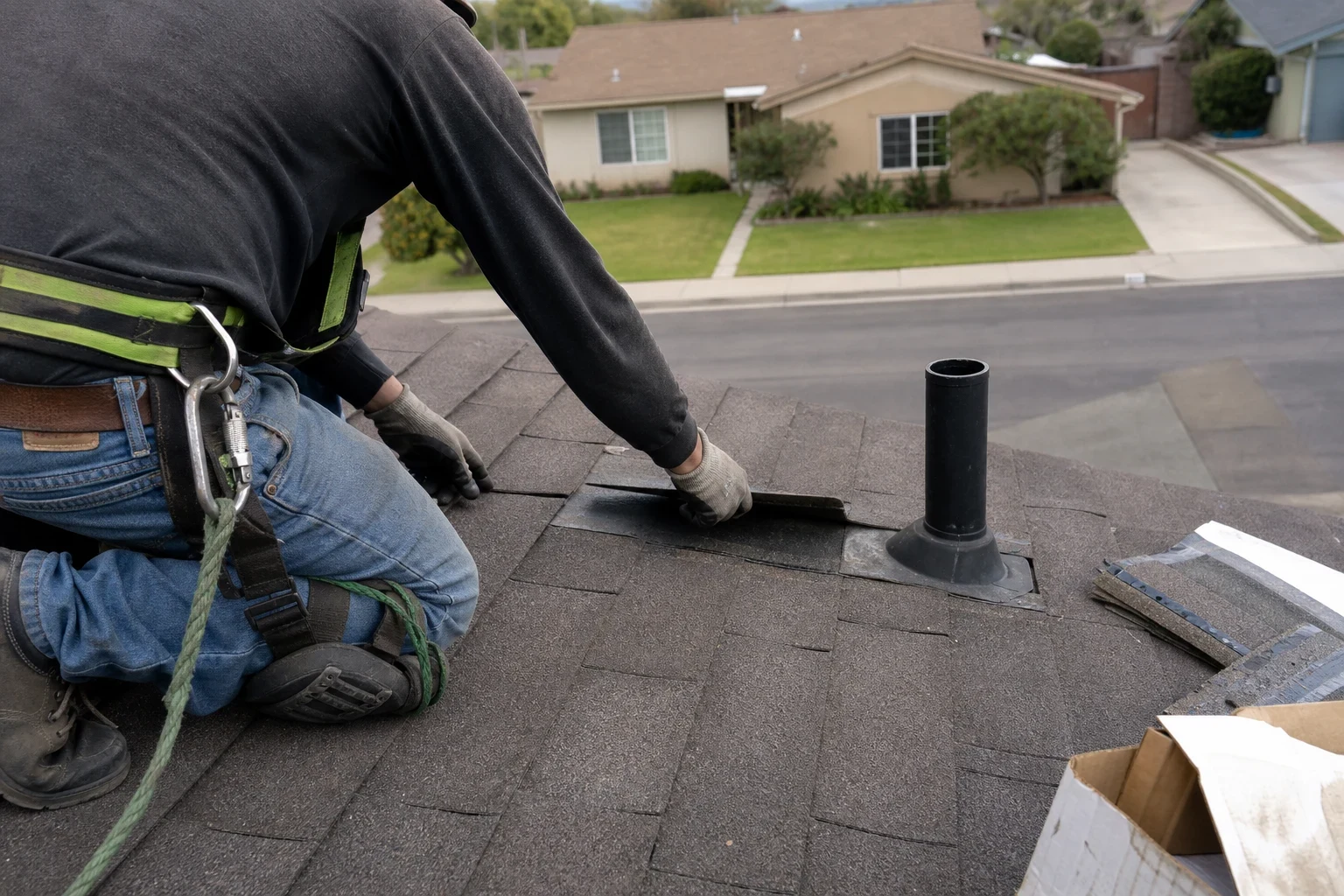
Our roof leak repair starts in the attic when there is access and ends on the roof, following the path in between. Most leaks come from a short list of places: cracked pipe boots, lifted or rusted flashing at walls and chimneys, worn valleys, and nail holes left by old antenna or dish mounts. Once we know which one it is, the repair is usually small and specific.
Many leaks around Norwalk appear with the first heavy rain of winter, when months of sun have dried out sealant and rubber boots. When the work is done, we come back to look at it again and leave you with notes on what to watch.
What a Leak Repair Includes
Attic and ceiling tracing
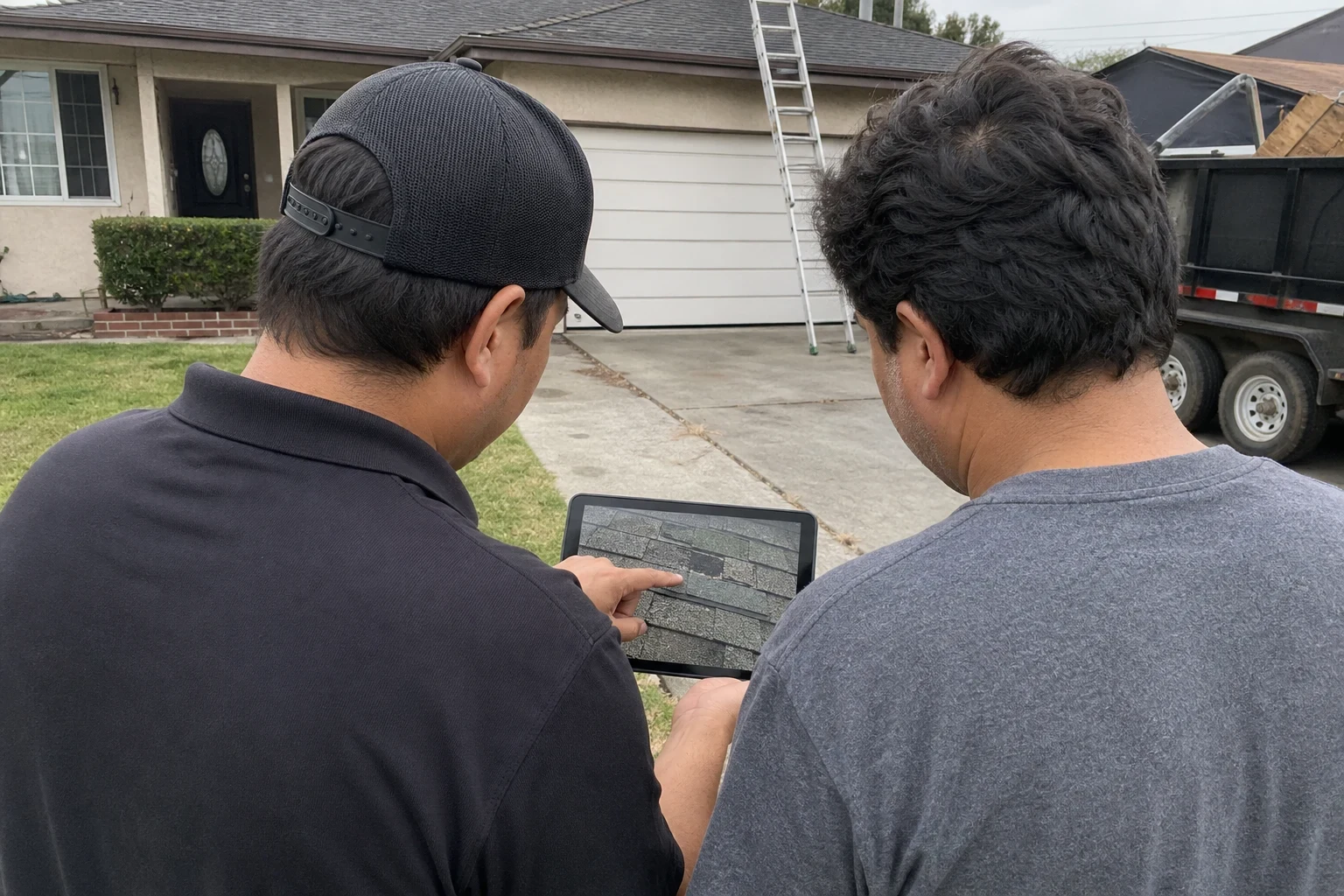
We look at the underside of the decking for water trails, dark staining and damp insulation, then match them to what is above. You get photos of both sides.
Flashing and penetration repairs
Pipe boots, vent collars, skylight curbs and wall flashing are replaced or reset rather than caulked over. Sealant is used only where it belongs, as a backup to metal and membrane.
Shingle and tile matching
We replace damaged composition shingles with the closest match we can source, and reset or swap cracked tiles so the lines stay true. On tile roofs the underlayment beneath is often the real culprit, so we check it before relaying.
Decking and underlayment fixes
When plywood has gone soft from moisture, that section comes out and fresh sheathing goes in before the roof is closed up. New shingles laid over spongy decking only move the problem somewhere else.
A return visit and care notes
We come back once a good rain has passed to look at the repair from inside and out. You also get written notes on the repaired area and the signs that would mean it needs attention again.
Signs Water Is Getting Into Your Home
- Water rings on the ceiling
- A stain that has dried still tells you moisture reached the drywall at least once. Rings that widen with each storm mean the leak is active.
- Peeling paint or bubbled drywall
- Moisture trapped behind paint shows up as blisters, often near exterior walls or around a chimney.
- A musty attic
- A damp, sour smell or darkened insulation can mean slow leaking that has not reached the ceiling yet.
- Drips that come and go with the wind
- If water appears only when rain blows from one direction, it is likely getting behind flashing or a wall joint rather than through the open field of the roof.
- Daylight or granules where they shouldn't be
- Pinpoints of light through the attic decking, or piles of shingle granules at the downspouts, show the roof surface is wearing thin.
How a Leak Repair Runs
- 1
Free inspection and tracing
We start with a free roof inspection. We check inside first, then go up and follow the path, photographing what we find along the way.
- 2
A written estimate
Your free written estimate spells out what is causing the leak, what we plan to fix and which materials we will use. If the roof is wearing out across the board, you will hear that plainly from us, along with whether a repair still pays or roof replacement is the wiser use of your money.
- 3
The repair itself
We protect plantings and walkways, open only what needs opening and make the repair. Most leak repairs take part of a day. Debris is cleared and the yard is swept with a magnet for nails before we leave.
- 4
Checking back once it rains
When the next solid rain has come through, we return to confirm the area stayed dry inside and out. We go over the care notes with you and answer any questions that came up.
What Affects the Price of a Leak Repair
Most leak repairs are modest jobs, but the price depends on what the water has already reached. We price once we have inspected, not over the phone, and the written estimate lists each item. On a bigger repair, paying over time is an option: financing is available through Service Finance Company, subject to credit approval.
- Source of the water
- A cracked pipe boot is a quick swap. Rebuilding flashing at a chimney or sidewall takes more time and material.
- Hidden damage
- Soft decking, wet insulation or rotted fascia add to the scope. We show you photos before any extra work is done.
- Roof material
- Tile needs careful lifting and resetting, and matching older tile or discontinued shingles can take extra sourcing. Flat and low-slope sections call for different membranes altogether.
- Pitch and access
- Steep roofs, second stories and narrow side yards need more safety setup and more time.
Roof Leak Questions
- Can you just patch the spot above the stain?
- We can, but it often will not stop the leak, because water rarely enters right above where it drips. We trace it first so the repair goes where the water actually gets in. That keeps you from paying for the same leak twice.
- Should I repair the leak or replace the roof?
- One or two leaks on a roof with life left are worth repairing. When leaks keep appearing in new places, shingles are brittle, or decking is soft in several areas, replacement usually costs less over time. We give you our honest read and show you the photos behind it.
- Will homeowners insurance cover a roof leak?
- Coverage turns on the cause and the wording of your policy. Damage from a sudden event, such as wind peeling shingles back or a limb landing on the roof, tends to be covered. Gradual wear and aging generally are not. We work directly with your insurance claim, supplying photos and a clear description of the damage and the repair. Whether it is covered is up to your insurer, not us.
- What should I do before you arrive?
- Move furniture and valuables away from the drip and set out a bucket and towels. Take a few photos of the stain for your records. Please stay off the roof, especially when it is wet.
- Why do you come back once the repair is done?
- A repair proves itself in the rain. We return when a good storm has passed to check inside and out, and our care notes cover simple habits like keeping gutters clear and watching the sealant around vents. If anything looks off, we deal with it then.

Get the Leak Traced Before the Next Rain
A phone call gets you a free roof inspection and a free written estimate. We find where the water gets in, fix that spot and come back to make sure it held.